Absolute Batman #25 Tops 775,000 Reported Orders; So Much for Nobody Buying Comics Anymore
For years, the American comic-book industry has been conducting what amounts to an extended autopsy on a patient who stubbornly refuses to die. Comic shops face difficult economics, production costs keep rising, and every discussion of the direct market seems to end with somebody announcing that nobody buys comic books anymore. Somebody might want to tell Batman.
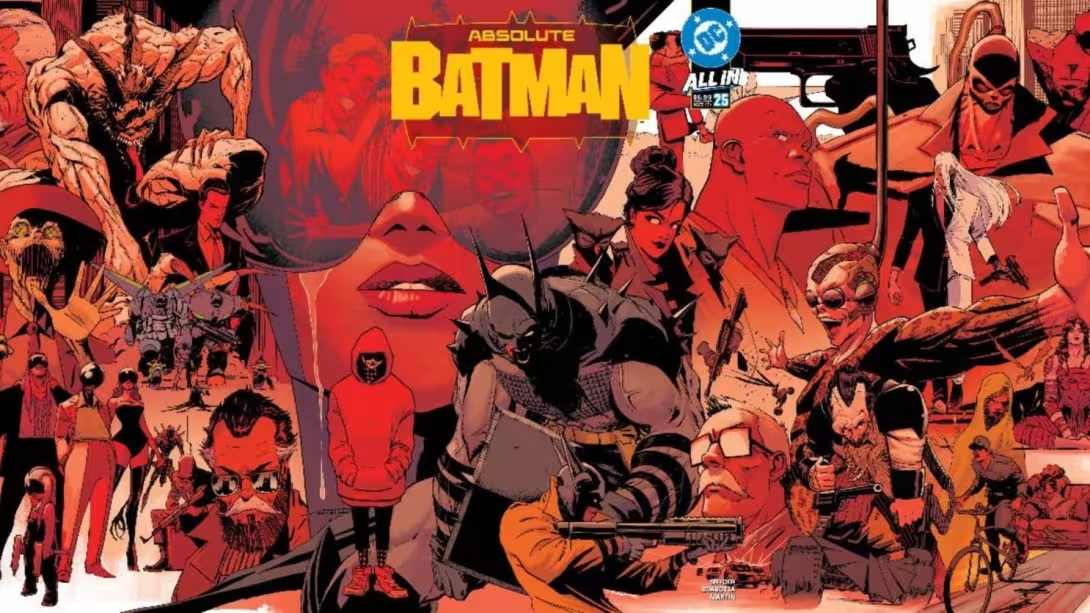
Today, DC releases Absolute Batman #25, Scott Snyder and Nick Dragotta's milestone installment in their reinvention of the Dark Knight. According to Rich Johnston's October 16 report at Bleeding Cool, comic-book retailers have ordered more than 775,000 copies. That's an extraordinary reported commitment to one contemporary superhero issue, but it comes with a necessary caveat: the figure is attributed to Johnston's industry sources, has not been publicly confirmed by DC, and represents retailer orders rather than sales to individual readers.
Those distinctions don't make the story uninteresting. They make it worth examining properly, because the more useful question isn't whether Batman has magically saved an entire industry. It's what this particular comic has done to inspire such substantial confidence among shops and collectors.
A Batman Without the Safety Net
The premise behind Absolute Batman sounds almost absurdly simple: take away Bruce Wayne's inherited wealth and rebuild the character without the familiar financial safety net. What emerges is a physically imposing, confrontational Batman whose relationship to Gotham feels different from the polished billionaire crime-fighter most audiences recognize. The silhouette is exaggerated, the action is ferocious, and the character is still unmistakably Batman.
That last point matters. Snyder and Dragotta haven't discarded the essential appeal of a determined, resourceful Bruce Wayne driven to protect Gotham. They've changed his circumstances, which gives longtime readers something new to discover while preserving enough of the character's identity to make the experiment recognizable. A famous name may persuade somebody to pick up issue one, but a distinctive interpretation gives that person a reason to return.
The series also looks emphatically like a comic book. Dragotta's expressive figures and kinetic page design take advantage of a medium that can make impossible physical action feel natural. This Batman isn't trying to pass for a prestige television pilot waiting for a streaming-service budget; he's operating in a visual language comics can deliver particularly well.
What 775,000 Orders Actually Mean
The reported total is striking partly because it concerns issue #25 rather than a debut. Johnston's reporting says the previous order record for Absolute Batman was just under half a million copies, suggesting that retailer commitments have reached a new high well into the run. That is noteworthy in a market where launch issues often draw the largest initial orders.
It is not, however, a clean count of new readers. Shops buy inventory in anticipation of demand, and a single customer may purchase several covers. Retailer incentives, premium editions, and the collectible appeal of a milestone can increase orders without creating a corresponding number of unique readers. The difference matters because the industry's speculative boom in the 1990s demonstrated how quickly impressive shipment totals can be mistaken for durable audience growth.
That doesn't mean variants explain everything. The Grand Comics Database lists numerous cover editions for issue #25, including connecting and premium versions, but such strategies are hardly exclusive to this series. Plenty of comics offer variants without inspiring anything close to the reported commitments for Absolute Batman. The real test will be whether enthusiasm continues after the milestone packaging has come and gone.
Reinvention Isn't the Same as Replacement
Readers are often described as hostile to change, although Batman's history suggests something more complicated. The character has moved through camp television, detective noir, gothic horror, blockbuster films, and wildly different artistic interpretations. Fans have accepted many versions because the creators found new ways to dramatize qualities audiences already associated with Bruce Wayne.
Absolute Batman changes the surrounding machinery without losing the central obsession. The result feels like a reinvention rather than a familiar logo pasted onto an unrelated character. That's a distinction publishers should take seriously when they talk about making established properties relevant to new audiences.
Issue #25 also has a natural story hook: the escalating confrontation with the Absolute Joker. DC's official listing confirms the October 28 release, credits Snyder and Dragotta, and advertises a high-stakes milestone at a $5.99 standard price. The marketing promises a turning point, but readers ultimately decide whether an event feels earned by the story leading up to it.
What Independent Publishers Can Learn
Independent creators cannot reproduce Batman's advantages. The character arrives with generations of public recognition, major corporate backing, and a merchandising presence no new property could reasonably match. Treating this order total as a blueprint for a small publisher would be fantasy.
There is, however, a creative lesson worth borrowing. A comic needs an identity that readers can recognize quickly and remember afterward, whether that identity comes from a striking premise, a compelling character, an unusual artistic approach, or the creator's voice. A superhero costume, a monster on a cover, or a spaceship in the background is not a substitute for a reason to care about what happens next.
The lesson isn't that every publisher needs its own Batman. It's that every publisher needs to make its own book feel like something readers would miss if it disappeared. That's harder than commissioning another variant cover, but it's also a better foundation for a lasting audience.
Maybe the Audience Never Disappeared
One remarkable comic cannot repair the challenges facing specialty retailers, solve distribution problems, or prove that the entire market is expanding. Nor should a reported order figure be converted into an imaginary census of readers. The most responsible interpretation is narrower: at least one contemporary superhero series has inspired retailers to make a very large bet on demand.
Still, that bet complicates the easy claim that nobody wants comics anymore. When a recognizable character receives a bold visual identity and a story that readers want to follow, the medium can still command attention on a remarkable scale. The Bat-Signal isn't proof that the industry has been saved, but it may be a reminder that the audience is willing to show up when given a compelling reason.